

Key Takeaways:
- Top ingredients recommended by veterinarians for your cat’s healthy urinary tract include glucosamine, chondroitin, omega-3 fatty acids, cranberry extract, d-mannose, and probiotics.
- Cats are less prone to UTIs compared to dogs.
- Older cats frequently experience urinary health issues like FLUTDs (feline lower urinary tract diseases).
- Diet and exercise can support your cat’s urinary health.
- Recommended supplement dose and administration.
Veterinarians Recommend 5 Ingredients for Cat Urinary Health
Remember that supplements should not replace antibiotics for treating active infections, and it’s essential to consult with your vet for the correct dosage and use.
1. Glucosamine and Chondroitin: Supports Bladder Lining
Glucosamine and chondroitin are two compounds that help maintain the integrity of the bladder lining. They act as building blocks for the mucous layers that protect the bladder wall from urine acidity and bacteria. Include these in your cat’s diet to help fortify this protective layer, which is particularly beneficial for cats suffering from bladder inflammation or cystitis.
2. Omega-3 Fatty Acids: Reduces Inflammation
Omega-3 fatty acids are well-known for their anti-inflammatory properties. In the context of urinary health, they can help reduce inflammation of the urinary tract, which can alleviate symptoms of FLUTD and other urinary conditions. Fish oil supplements are a good source of omega-3s and can be easily added to your cat’s diet.
3. Cranberry Extract: Prevents Bacterial Infections
Cranberry extract is a natural ingredient known to prevent bacterial infections in the urinary tract. Its compounds can inhibit the adhesion of bacteria like E. coli to the bladder and urethra, reducing the risk of infection. It’s a common preventative measure for cats prone to UTIs.
4. D-Mannose: Inhibits E. Coli Attachment
D-Mannose is a type of sugar that can prevent certain bacteria, such as E. coli, from sticking to the walls of the urinary tract. By flushing out these bacteria, D-Mannose can be a helpful supplement for cats with a history of UTIs caused by E. coli.
5. Probiotics: Balances Healthy Gut and Bladder Bacteria
Probiotics are beneficial bacteria that support a healthy gut microbiome, which is linked to overall health, including the urinary tract. A balanced gut flora can help prevent the overgrowth of harmful bacteria that might otherwise cause infections in the urinary tract.
Top Rated Supplements
We recommend a combination of these 2 supplements to get the complete list of ingredients for cat urinary health. The first supplement contains cranberry extract, d-mannose, and probiotics. And the second supplement contains glucosamine, chondroitin, and omega-3 fatty acids.
1. Nutramax Cosequin Joint Health Supplement
Nutramax Cosequin Joint Health Supplement is veterinarian recommended. It contains glucosamine, chondroitin, and omega-3 fatty acids. This is an Amazon Top Pick with a 4.4 rating (9,616 verified purchasers).


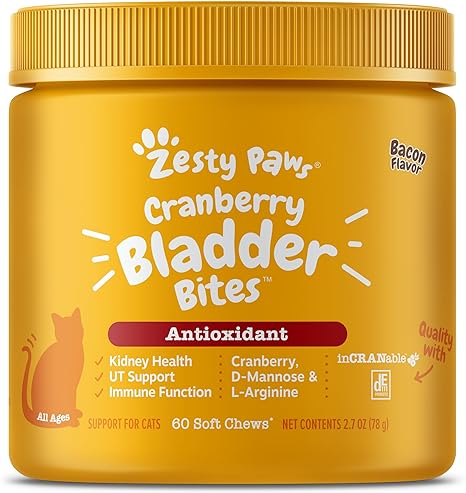
2. Zesty Paws Cranberry Bladder Bites
Zesty Paws Cranberry Bladder Bites is veterinarian recommended. It contains cranberry extract, d-mannose, l-arginine, and probiotics. This is an Amazon Best Seller with a 4.4 rating (12,307 verified purchasers).

UTIs Are More Prevalent in Dogs Than Cats
While urinary tract infections (UTIs) are often thought of as a common ailment in cats, they’re actually more frequently diagnosed in dogs. When you see symptoms of urinary tract issues in a cat it’s more likely to be an FLUTD or feline lower urinary tract disease. These conditions can be serious and require prompt medical attention.
Signs of UTIs (Upper Urinary Tract Infections)
Watch for these common signs of upper urinary tract infections and contact your vet right away to pinpoint the exact problem:
- Straining to urinate
- Bloody or cloudy urine
- Urinating outside the litter box
- Licking the urinary opening excessively
Signs of FLUTD (Feline Lower Urinary Tract Diseases)
Watch for these common signs of feline lower urinary tract diseases, a range of conditions affecting the bladder and urethra, and contact your vet right away for an accurate diagnosis:
- Difficulty urinating or only small amounts passed after frequent attempts
- Crying out while urinating
- Loss of bladder control
- Urinating more than usual or in inappropriate settings
- Avoidance or fear of litter box
- Strong ammonia odor in urine
- Hard or distended abdomen
- Cloudy or bloody urine
- Drinking more water than usual
- Excessive licking of genital area
- Lethargy or hiding
- Vomiting
Diet & Exercise Support a Healthy Urinary Tract
How Nutrition & Liquids Affect Cat’s Urinary Health
Moisture-rich foods help keep the upper and lower urinary tracts flushed and functioning properly. Canned foods or those with added water are beneficial, as cats naturally have a low thirst drive. And a balanced diet with the right vitamins and minerals can prevent crystal formation, which can lead to blockages.
Encourage water intake by providing fresh water daily and consider using water fountains to attract your cat to drink more.
How Exercise Supports Healthy Urinary Tract
Exercise helps maintain a healthy weight, reducing the risk of urinary tract issues. It also stimulates circulation and helps promote regular urination, which flushes out the urinary tract. Engage your cat with toys and interactive play to keep them active.
Starting Your Cat on Supplements
Introducing your cat to urinary supplements should be done with your veterinarian’s guidance. It’s important to choose high-quality supplements and to incorporate them gradually into your cat’s diet to minimize any digestive upset.
Red Flags to Avoid
Be cautious of supplements with artificial additives, colors, or preservatives, as these can be harmful to your cat. Also, avoid supplements that have not been vetted by your veterinarian, especially those that claim to cure or treat conditions without scientific backing.
Proper Dose and Administration
The proper dose of a urinary supplement is crucial and can vary based on your cat’s size, age, and specific health needs. Always follow the dosing instructions provided by the manufacturer or your vet. Most supplements come in forms that can be mixed with food or given as a treat, making administration easier.
Potential Side Effects
While most urinary supplements for cats are safe, some cats may experience side effects such as gastrointestinal upset. If you notice any adverse reactions after starting a supplement, stop and consult your veterinarian immediately.
Maintain Hydration
Above all, ensure your cat stays well-hydrated. Supplements can be beneficial, but they work best when your cat is drinking plenty of water. This helps to flush out the urinary system and keep everything functioning smoothly.
Frequently Asked Questions (FAQ)
1. Can urinary tract supplements replace veterinary care?
Urinary tract supplements are intended to support, not replace, veterinary care. They can be an excellent addition to your cat’s health regimen, but they are not a cure for urinary tract diseases or a substitute for professional medical advice and treatment.
2. How often should I give urinary tract supplements to my cat?
The frequency of supplement administration will depend on the specific product and your cat’s individual needs. Always follow the dosage instructions on the supplement packaging or the advice of your veterinarian. Some supplements are given daily, while others might be administered less frequently.
3. Are there any side effects of these supplements?
Most urinary tract supplements for cats are designed to be safe and free from any side effects. However, any change to your cat’s diet could trigger an adverse reaction. Watch for:
- Gastrointestinal upset
- Allergic reactions
- Changes in urination patterns
Always monitor your cat closely to ensure their supplements are effective and safe.
4. How quickly can I expect to see improvements?
Improvements in your cat’s urinary health can vary depending on the underlying issue, the supplement used, and your cat’s overall health. Some cat owners report seeing changes within a few weeks, while for others, it may take longer to notice a difference.