
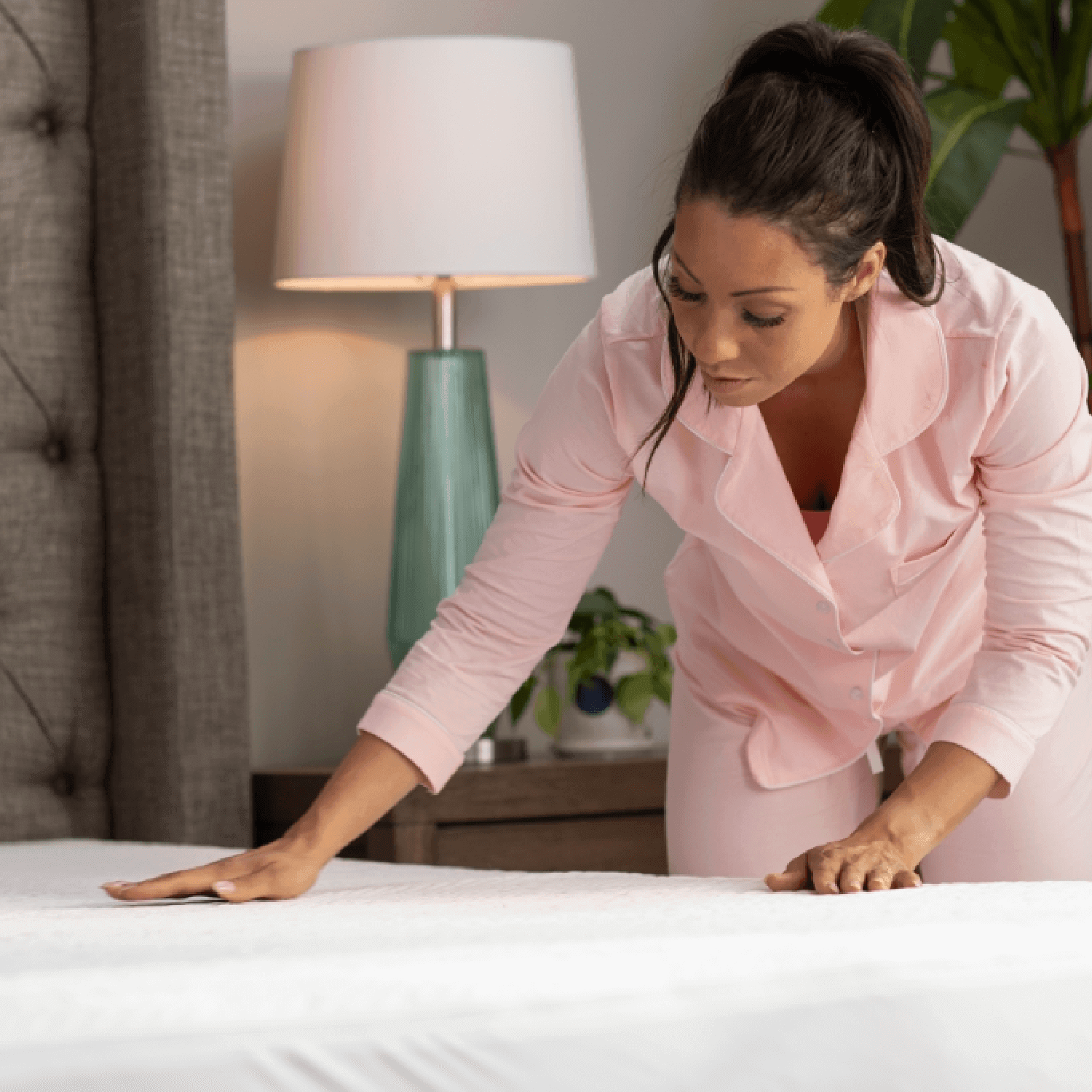
Key Takeaways:
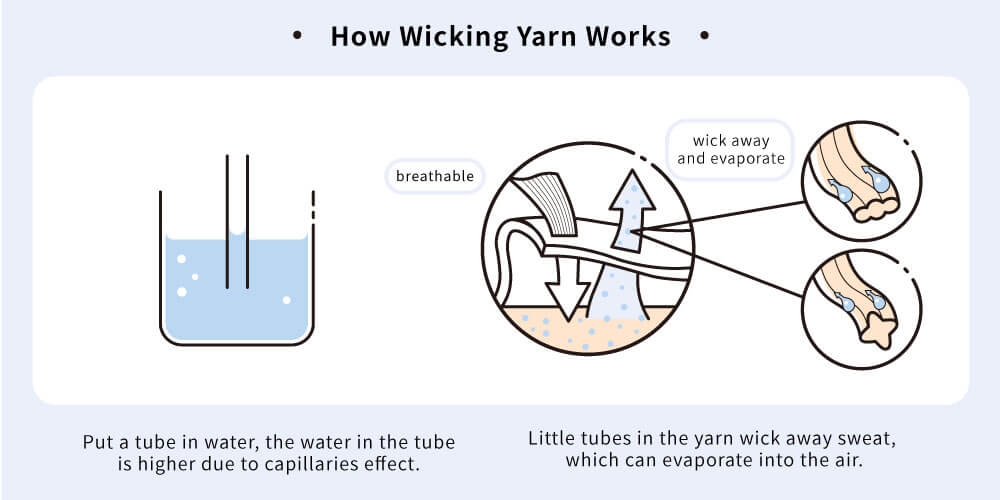
- Moisture wicking, or sweat wicking fabrics, use advanced technology. Small channels woven into the fibers funnel sweat away from your body, where it evaporates and keeps you cool and dry.
- A cooling mattress protector with wicking technology relieves many of the symptoms of perimenopause and menopause, including night sweats and urine leakage. So, you get a good night’s sleep.
- Check the manufacturer’s label to make sure you’re getting wicking technology. Some cooling mattress protectors rely solely on breathable fabrics for temperature control, but they are far less effective at controlling night sweats.
Perimenopause Night Sweats

Perimenopause can be a tumultuous time for many women, with fluctuating hormones causing a range of symptoms, including night sweats and urine leakage. These episodes can disrupt your sleep and leave you feeling tired and foggy during the day. Fortunately, advancements in bedding technology, such as cooling waterproof mattress protectors, have made it possible to alleviate these symptoms and improve sleep quality.
What Causes Perimenopause Sweating
During perimenopause, the body’s estrogen levels fluctuate, which can affect the hypothalamus — the part of the brain that regulates body temperature. This can lead to episodes of overheating, known as hot flashes, and night sweats. A cooling mattress protector can help by drawing heat away from the body and providing a breathable barrier that keeps the bed feeling fresh.
How Night Sweats Can Disrupt Your Sleep
When you experience night sweats, the discomfort can wake you up repeatedly, making it hard to get the deep, restorative sleep you need. This can lead to fatigue, irritability, and even impact your overall health. A waterproof mattress protector with cooling properties can absorb excess moisture and regulate temperature, helping you stay asleep longer.
How to Combat Night Sweats
Night sweats and incontinence during perimenopause might seem like separate issues, but they both call for solutions that protect the mattress and provide a dry, comfortable sleeping surface. Here’s where a cooling waterproof mattress protector comes into play. It’s a practical and effective way to safeguard your mattress from moisture while keeping the bed’s surface cool and comfortable.
The Role of Body Temperature in Sleep Quality
Your body’s core temperature naturally drops as you prepare to sleep, and maintaining a cool environment is conducive to better sleep. A mattress protector with cooling capabilities helps in maintaining this optimal temperature by drawing heat away from the body and promoting air circulation. This can be particularly beneficial for those who tend to sleep hot or are going through hormonal changes that affect body temperature.
Relief for Bedwetting & Night Sweats
The combination of waterproofing and cooling features in a mattress protector is key. It ensures that while the mattress stays dry, the sleeper also stays cool. This dual-action approach is what makes these protectors an ideal choice for dealing with both bedwetting and night sweats. The same technology provides solace from the heat-and-sweat that come with perimenopause, leading to a more peaceful night’s rest.
How to Choose a Cooling Waterproof Mattress Protector
When it comes to selecting the right bedding to manage perimenopause sweating, a cooling waterproof mattress protector stands out as a must-have.
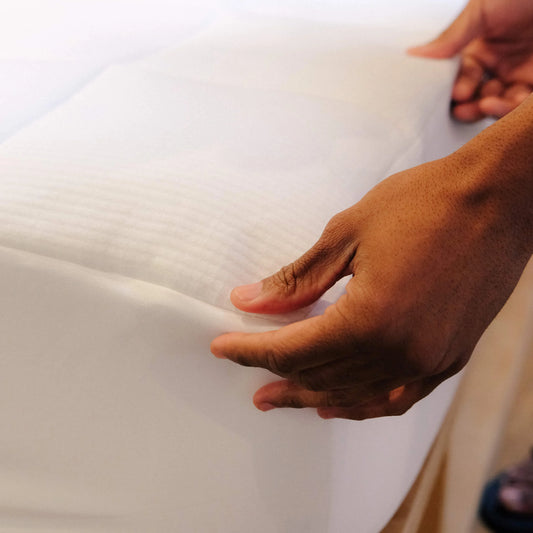
Slumber Cloud Wins Good Housekeeping’s 2024 Top Choice Award

One of our favorite cooling mattress protectors with wicking technology is the Slumber Cloud Performance Mattress Pad. It won Good Housekeeping’s 2024 Top Choice Award for best cooling mattress protector. It combines 2 temperature-regulating features. A proactive NASA-engineered technology. And a superior moisture-wicking capability. This innovative product regulates temperature for uninterrupted sleep, which makes it a practical investment for any woman who is managing perimenopause or menopause symptoms.
Revolutionary Cooling Technology Developed by NASA Scientists

The cooling technology found in some of the best mattress protectors was originally developed by NASA scientists. A cutting-edge material that helps astronauts maintain their body temperature in the extreme conditions of space. Now, this technology is being transferred to bedding products. It absorbs, stores, and releases heat, which maintains a comfortable sleeping temperature all night long.
Moisture-Wicking Materials Pull Sweat Away
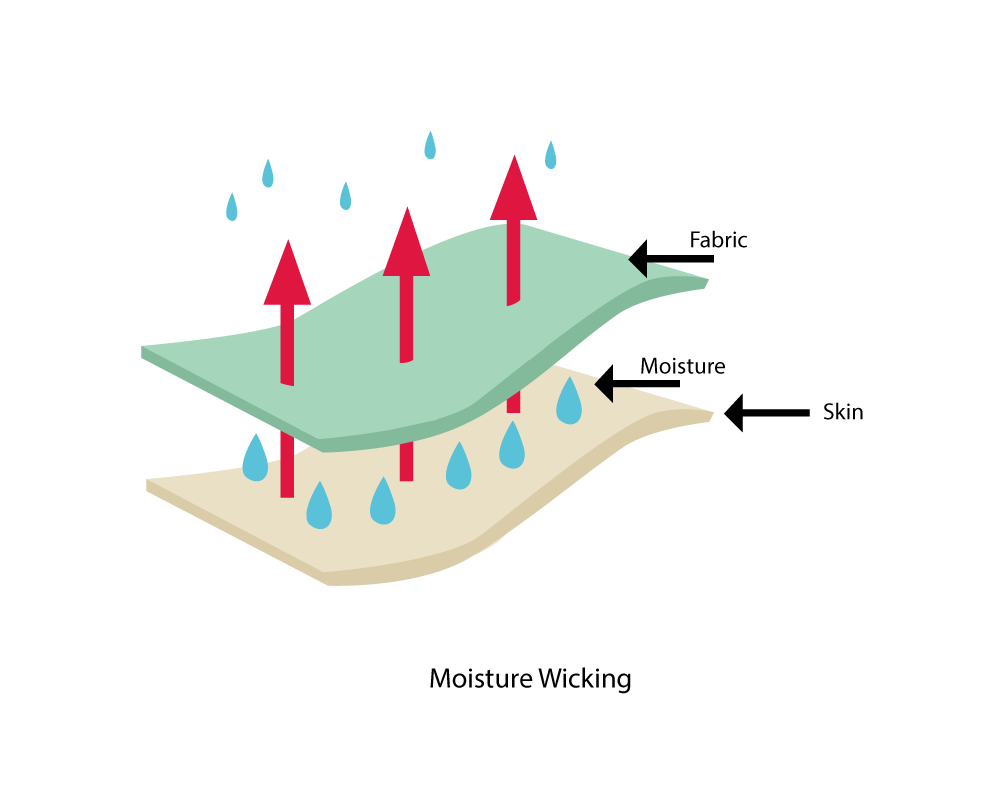
The best cooling waterproof mattress protectors also feature moisture-wicking materials. These fabrics are engineered to draw sweat and other liquids away from the skin, where it can evaporate quickly and keep the sleeper dry. This is particularly important for managing night sweats and bedwetting, as it helps to prevent the discomfort that comes from lying in dampness.
Because staying dry is as important as staying cool, these moisture-wicking properties play a pivotal role in ensuring a good night’s sleep, despite any challenges with bedwetting or sweating. The result is a more comfortable, hygienic sleep environment that supports your wellbeing.
Cotton & Bamboo Are Lightweight, Breathable Fabrics
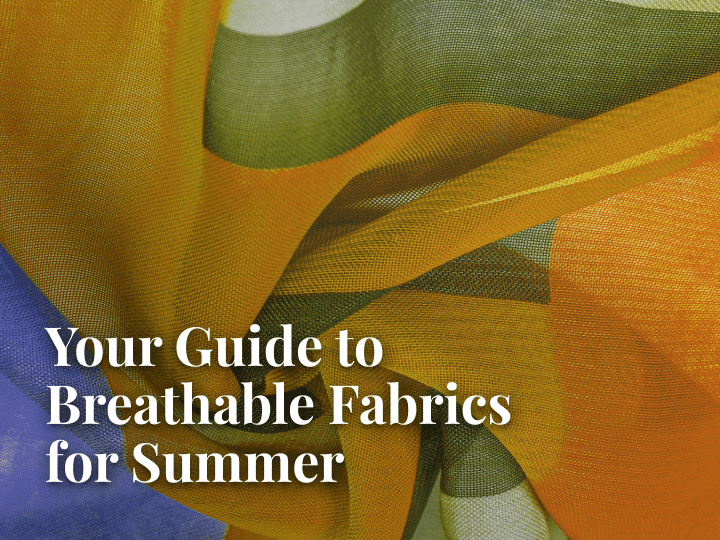
When choosing a cooling waterproof mattress protector, the fabric is a crucial consideration. Cotton and bamboo are among the top choices because they are lightweight and breathable. They allow air to circulate, which helps to dissipate heat and moisture away from the body. This means that even on the warmest nights, you can stay cool and dry.
Remember that the most effective cooling mattress protectors combine breathable fabrics with cutting edge wicking technology.
Choose a Lower Thread Count for Cooling Ventilation
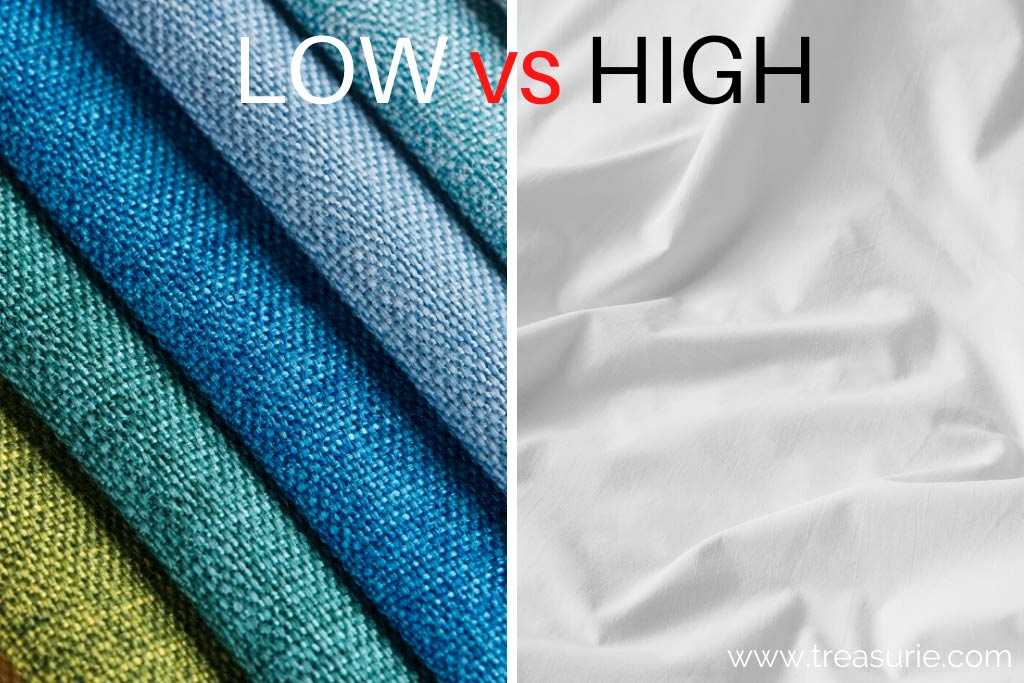
Another aspect to consider is the thread count. While a high thread count is often associated with luxury, it can also lessen the protector’s breathability. A lower thread count, in the range of 200 to 400, creates more cooling ventilation and temperature regulation. An especially important feature for women experiencing night sweats.
Make Sure You’re Getting Wicking Technology
Not all cooling mattress protectors have wicking technology. Many mattress protectors that claim to have cooling features rely on breathable fabrics alone. Unfortunately, some breathable fabrics absorb and trap moisture, instead of wicking it away. Read the manufacturer’s label to make sure you’re getting breathable qualities in combination with wicking technology.
Frequently Asked Questions (FAQ)
1. Can a cooling waterproof mattress protector really stop night sweats?
Absolutely, a cooling mattress protector can be a significant aid in managing night sweats. The key is to select a protector that uses wicking technology to pull moisture and heat away from you while you sleep. This dual functionality ensures that any sweat produced during the night is quickly wicked away from the body, while the breathable material prevents heat from becoming trapped. This can greatly reduce the discomfort caused by night sweats and lead to a more restful sleep.
2. Are there mattress protectors suitable for both bedwetting and perimenopause sweating?
Yes, there are mattress protectors on the market that are designed to tackle both bedwetting and perimenopause sweating. These protectors are typically made with a layer that blocks moisture from penetrating the mattress, combined with another layer that facilitates temperature regulation. The result is a versatile bedding solution that provides peace of mind and comfort for women dealing with either or both of these issues.
3. How does a cooling mattress protector work?
A cooling mattress protector uses advanced materials that are designed to regulate temperature. Some were developed by NASA to keep our astronauts cool and dry in space. These materials might include special fibers that absorb excess heat when the body is too warm and release it when the body starts to cool down. This continuous exchange helps maintain a steady, comfortable temperature throughout the night, which is essential for uninterrupted sleep.
4. Will I still need to use air conditioning with a cooling mattress protector?
While a cooling mattress protector can greatly improve your sleeping environment, it’s not a complete substitute for air conditioning in extremely warm climates. However, it can reduce the need for air conditioning by keeping the bed at a more consistent, cool temperature. This means you may be able to set your air conditioner at a higher temperature, which can save on energy costs.
5. How do you wash and maintain a waterproof cooling mattress protector?
Maintaining a waterproof cooling mattress protector is straightforward. Most protectors can be machine washed on a gentle cycle with mild detergent. It’s important to avoid bleach and fabric softeners, as they can damage the waterproofing and cooling properties. Tumble dry on low heat or allow the protector to air dry. Regular washing will help maintain the effectiveness of the protector and ensure a clean sleeping environment.
Sources
- National Sleep Foundation. “How Body Temperature Affects Sleep.” SleepFoundation.org.
- National Institute on Aging. “Menopause Basics.” NIH.gov.
- Mayo Clinic. “Menopause: Symptoms & Causes.” MayoClinic.org.
- American Academy of Sleep Medicine. “Sleep Hygiene.” SleepEducation.org.
- NASA Spinoff. “Out of This World Sleep Technology.” Spinoff.NASA.gov.
- The Sleep Council. “Bedroom Environment.” SleepCouncil.org.uk.
- Sleep.org. “Cotton vs. Bamboo Sheets: Which Ones Should You Buy?” Sleep.org.
- Good Housekeeping. “2024 Top Choice Awards: Best Cooling Mattress Protector.” GoodHousekeeping.com.
- WebMD. “How Estrogen Affects Your Sleep.” WebMD.com.
- SleepFoundation.org. “What Is Moisture-Wicking Fabric?” SleepFoundation.org.