

Key Takeaways:
-
When managing heavy bedwetting and incontinence, you need extra protection plus easy clean-ups for middle of the night accidents.
-
Combine a waterproof mattress protector cover with a bedwetting pad for the ultimate protection and convenience.
-
Disposable bedwetting pads are good for travel and sleepovers. Reusable bedwetting pads are eco-friendly and cost-effective, making them a great choice for everyday use.
-
Consider a hypoallergenic, organic cotton mattress protector cover for kids and elderly parents with sensitive skin, allergies, or asthma.
Bedwetting Pads vs. Mattress Protector Covers
Bedwetting pads sit on top of the sheets. They are designed to absorb large volumes of urine on a limited section of the mattress. They can be reusable or disposable.
Mattress protector covers, on the other hand, are like a fitted bed sheet that goes between the mattress and the bottom sheet. They cover the entire top surface of the mattress plus all four sides. They create a waterproof barrier that protects the entire mattress from moisture.
Situations Where You May Need More Protection
When you’re managing frequent bedwetting or heavy incontinence you need a combination of features. First, you need wet protection. And second, you need convenient clean-up when everyone’s tired in the middle of the night.
A combination strategy, where you use a pad on top of a protector, gives you both protection and easy clean-up. The mattress pad is your heavy duty first line of defense. It sits on top of the fitted sheet, so it can be pulled up and thrown away without stripping the entire bed. The mattress protector is your second line of defense when there are extra-heavy accidents that leak over the sides of the pad.
Reusable Bedwetting Pads: Pros-and-Cons

Bedwetting pads are designed for convenience and come in two varieties, reusable pads and disposable pads that are thrown away after a single use. The disposable version is a good choice for travel, sleepovers, times when laundry facilities aren’t available, or anytime when you need the convenience. The reusable version is a good choice for everyday use when you want to be more eco-friendly.
Bedwetting pads are convenient, but they may leak at the sides when the sleeper shifts around during the night. And they may not be the most eco-friendly option for everyday use.
Waterproof Mattress Protector Covers: Pros-and-Cons
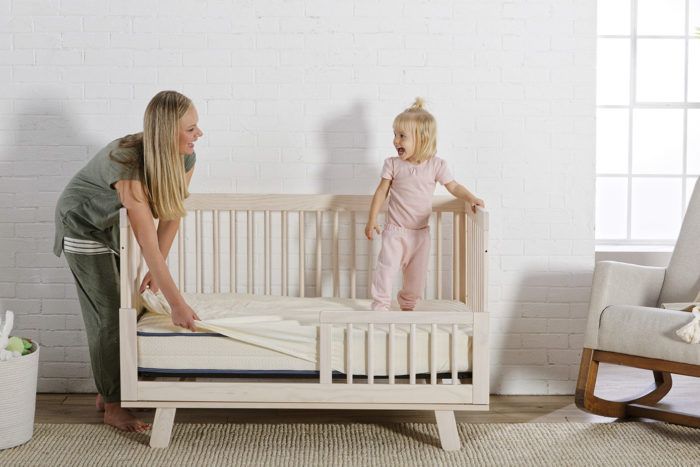
Waterproof mattress protector covers are a more permanent solution for bedwetting. They go on like a fitted sheet (between mattress and bottom sheet) and can be washed and reused many times. People often use pads during the early stages of bedwetting where it’s a nightly occurrence. Then they transition to just the mattress protector as the child grows out of their bedwetting phase.
Mattress covers provide complete waterproof protection. However, when there’s an accident it’s more difficult and time-consuming to clean, because you need to strip the sheets and the protector before replacing both.
Frequently Asked Questions (FAQ)
1. Are waterproof protectors safe for children & elderly?
Yes, waterproof protector pads are generally safe for children, pets, and elderly parents. Choose an organic cotton protector that’s free from any pesticides or harmful manufacturing chemicals.
One of our favorites is NATUREPEDIC. They just won the Good Housekeeping Top Choice 2024 Award for Best Organic Waterproof Mattress Protector for Bedwetting. It’s 100% waterproof. And the organic cotton fibers make it breathable and cooling. It’s a great option for children and elderly people with sensitive skin and allergies.
2. How long will a waterproof mattress protector last?
The lifespan of a waterproof mattress protector depends on the quality of the material and how frequently it is washed. On average, a good quality protector can last between one and two years before you need to replace it. You can extend the longevity by purchasing two protectors and rotating when there’s a wetting accident.
3. Are disposable mattress pads eco-friendly?
Disposable mattress pads that are used once and thrown away are convenient, but they’re not biodegradable. We recommend a reusable pad that can be washed and put back on the bed for everyday use. And a disposable pad for travel, sleepovers or any time when a laundry isn’t readily available.