
Key Takeaways:
- Fish oil and salmon oil are both rich in omega-3s, but different types of fish can differ in potency, purity, smell, and taste.
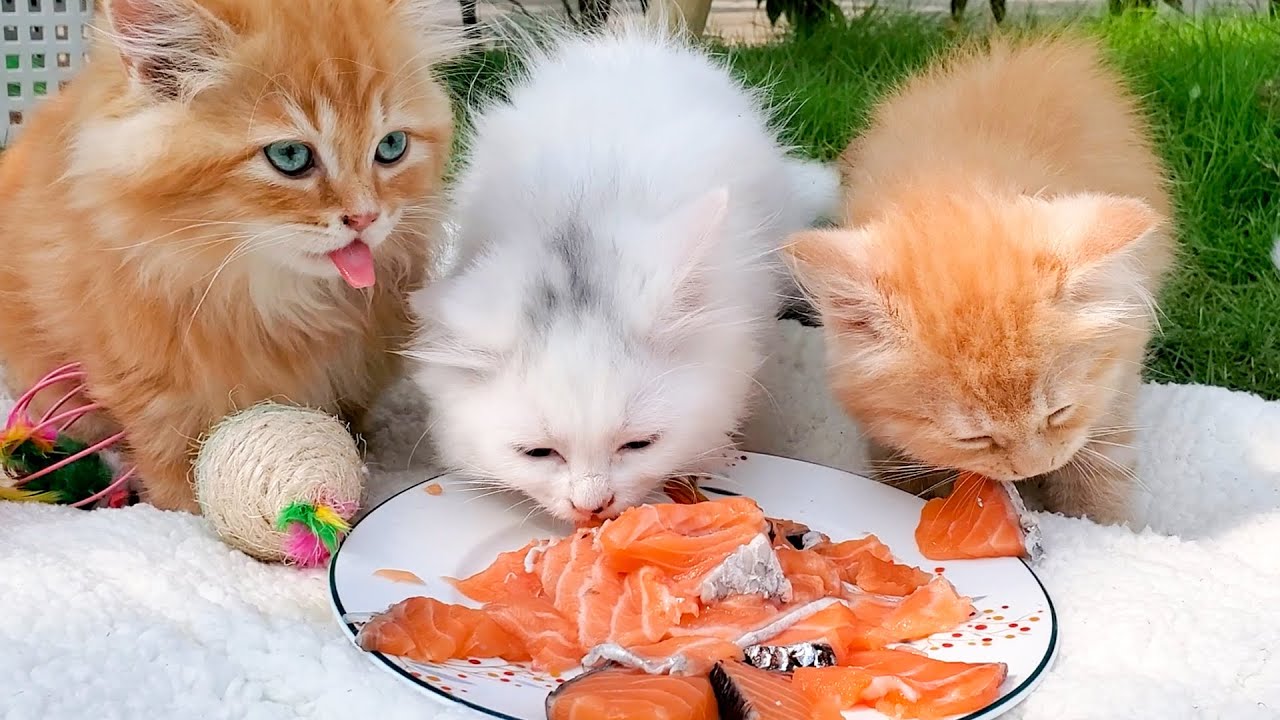
- People often prefer salmon oil due to its high level of DHAs. And cats love the strong fishy smell and taste.
- Omega-3 fatty acids are a fundamental building block for our physical bodies, both people and pets. They work at a cellular level supporting every physical system starting with skin and fur on the outside and heart and urinary tract on the inside. Plus, they’re known to boost the immune system.
- Recommended starting dose is 1/4 teaspoon of oil for every 5 pounds of your cat’s weight.
Omega-3 Fatty Acids and Your Cat’s Health
Cats can teach us a lot about our own health. Out in the wild they consume a wide variety of fish and enjoy the many benefits of the omega-3 and omega-6 fatty acids found in fish oils.
What Is an Omega-3 Fatty Acid?
Think of omega-3 fatty acids as the work horse of your cat’s nutritional world. Scientifically, omega-3s are polyunsaturated fats that your cat’s body can’t produce on its own. They must get these healthy fats from the foods they eat every day. The two most common fatty acids are EPAs (eicosapentaenoic acid) and DHAs (docosahexaenoic acid).
Why Are Omega-3s Good for Your Cat’s Health?

Omega-3s play an important role in cell membrane health and function. They impact skin and coat quality, heart health, urinary health, brain and cognitive function. And inflammation-related conditions like stiff joints, UTIs, and bladder infections. Check out the best cat supplements for urinary tract health for more information on supplements that support your cat’s urinary health.
- Improved skin and coat health: Shinier coat and less skin flaking.
- Anti-inflammatory effects: Improved arthritis and allergies. Fewer UTIs and bladder infections.
- Heart health: Increased cardiovascular function.
- Immune system support: Fend off illness and reduce severity of infections.
What’s the Difference Between Fish Oil and Salmon Oil?
Fish oil is a broad term that refers to oil extracted from fish. You can buy products derived from one type of fish or a combination of mackerel, cod, herring, tuna, krill, sardines, or salmon. Many people prefer salmon oil for its high DHA content. And cats seem to prefer salmon oil for its strong fishy smell and taste.
Are There Vegan Alternatives to Fish Oil?
While fish oils are the most common source of omega-3s for cats, there are vegan alternatives available. The most common sources are flaxseed, hempseed, and algae. Plant-based omega-3 fatty acids may not be as bioavailable to your cat’s physical biology as fish oil. In other words, their bodies absorb more omega-3s from fish sources than from plant sources. So, you may need to give a higher dose of vegan oil than fish oil.
Fish Oil vs. Salmon Oil: Which Is Better for Your Cat?
As long as your cat is getting the recommended dose of EPAs and DHAs, then the source becomes a personal preference for you and your cat.
Many people choose salmon oil over other fish oils. It’s rich in both EPA and DHA, but it normally has a higher DHA count than other fish oils along with some Vitamin E. Salmon oil is known to support your cat’s urinary health, including their bladder health, so it can lessen the severity and frequency of incontinence and wetting accidents in cats that are prone to urinary tract infections (UTIs) or feline lower urinary tract disease (FLUTD).
How to Choose an Omega-3 Fish Oil for Your Cat
When you’re looking for the best omega-3 for your cat, you’ll want to consider these 5 factors:
- Source: Look for oils derived from wild-caught fish rather than farm-raised to avoid potential contaminants and to ensure higher nutrient levels.
Purity: Make sure the oil is free from contaminants and has been molecularly distilled to remove heavy metals and other toxins.
Nutritional Level: Check the label for high levels of DHA and EPA. Wild-caught salmon tend to have larger amounts of fatty acids and fewer contaminants.
Sustainability: Choose an oil that’s certified as coming from a sustainable fishery to help protect ocean ecosystems.
Formulation: Make sure the product is formulated for pets. Human supplements are too strong for small animals, and they often contain artificial flavorings and other ingredients that are harmful to cats.
Amazon’s Choice
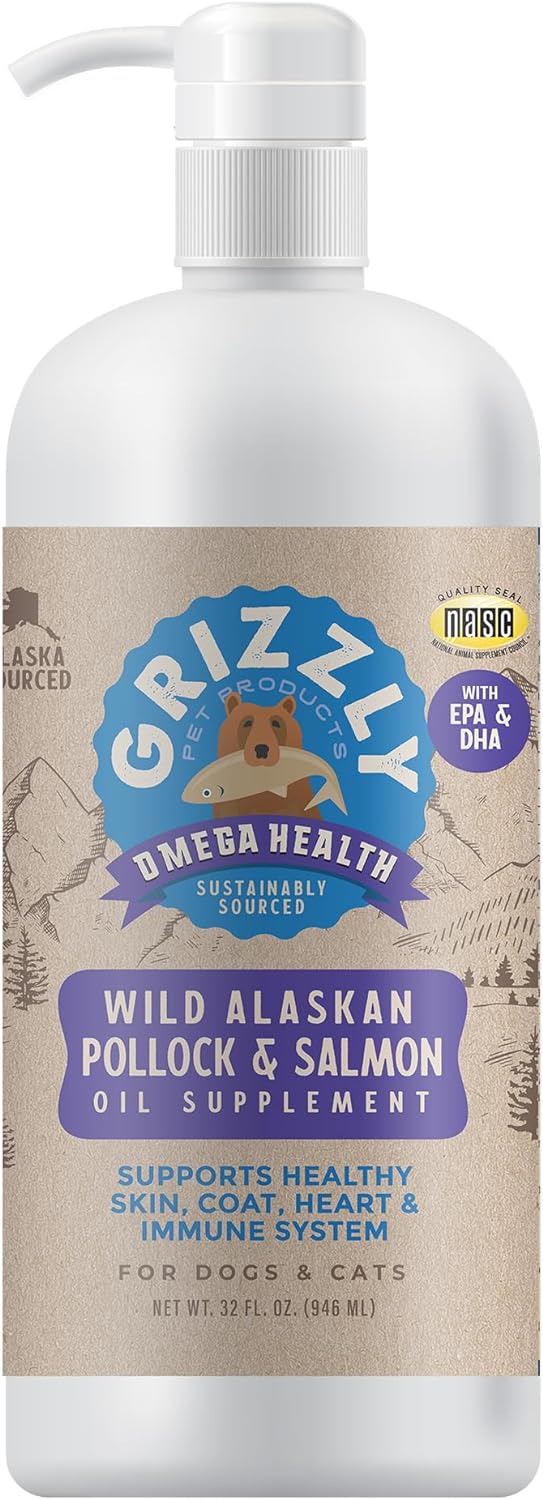
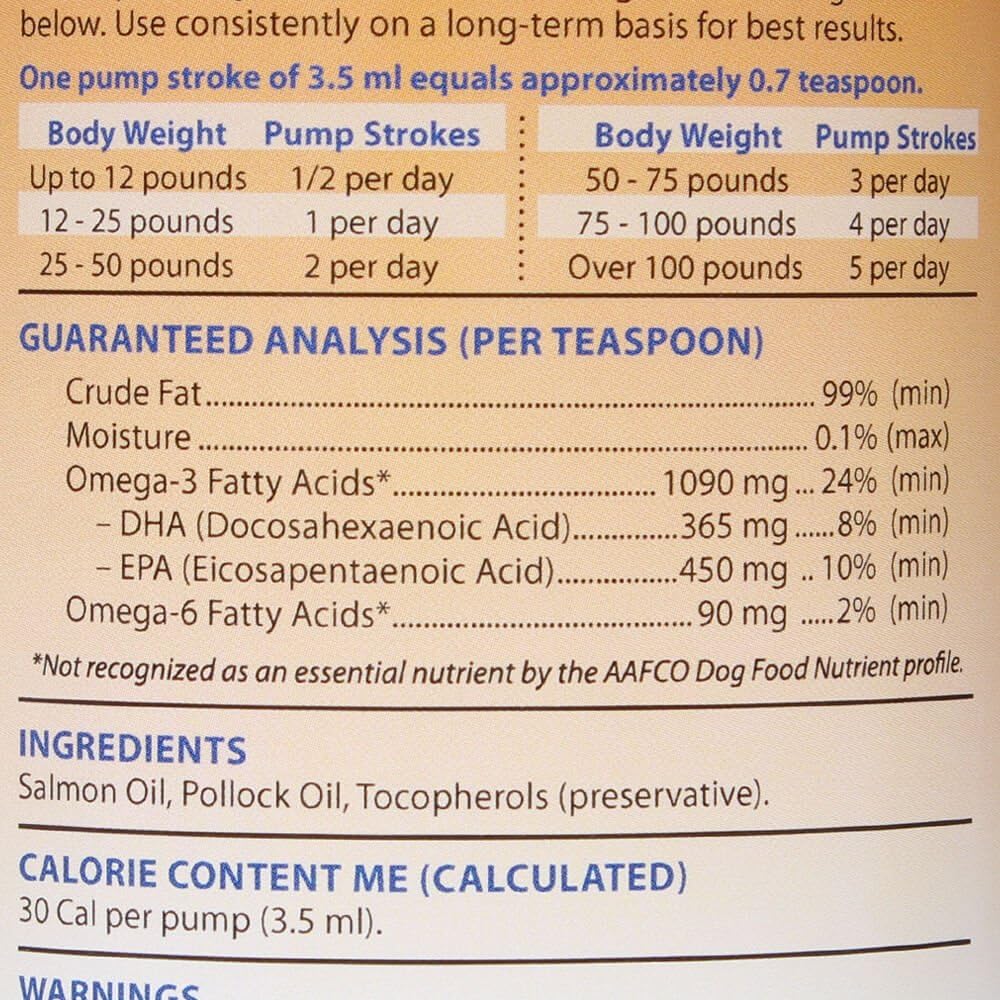
One of our favorite omega-3 fish oils for cats is Grizzly Omega Health for Cats. This blend of wild caught salmon and pollock fish oils has an outstanding profile with 1,090 mg of omega-3 and 90 mg of omega-6. This profile includes DHA 365 mg and EPA 450 mg per teaspoon.
Grizzly is an Amazon’s Choice with an amazing 4.6-star rating (8,734 verified purchases).
Side Effects
While omega-3 supplements are generally considered safe for cats, there can be side effects, especially if the starting dose is too high. Side effects can include:
- Diarrhea
- Bad breath
- Oily fur
- Weight gain, if the oil adds too many calories to their diet
If you notice any of these side effects, it’s important to adjust the dosage or consult with your vet. They may recommend a different type of supplement or a change in diet to better accommodate the addition of omega-3s.
Dosage
You can use this guide as a starting dose, but always check with your vet before starting your cat on any new supplement or medication.
|
Cat’s Weight |
Starting Dosage |
|---|---|
|
< 5 lbs |
1/4 teaspoon |
|
5-10 lbs |
1/2 teaspoon |
|
10-15 lbs |
3/4 teaspoon |
|
>15 lbs |
1 teaspoon |
When introducing salmon oil to your cat’s diet, start with the smallest dose to gauge their reaction. If they enjoy it, you can gradually increase to the recommended dose. If your cat won’t eat the salmon oil, then another fish oil might be a better alternative.
Frequently Asked Questions (FAQ)
1. Can omega-3 fish oils cause any side effects in cats?
Omega-3 fish oils can cause side effects when not dosed properly. Too much of a good thing can lead to weight gain, diarrhea, or oily skin and fur. Always follow the recommended dosage and consult with your veterinarian to tailor the dose to your cat’s specific needs.
3. Can I give my cat a human omega-3 fatty acid supplement?
It’s not a good idea to give your cat a human omega-3 supplement. Human supplements may contain additives or flavors that are not safe for cats. And they may contain different concentrations of omega-3 fatty acids, which could make dosing difficult and potentially dangerous to your 10-pound furry friend. Always choose a supplement specifically formulated for felines.
4. Is wild salmon oil better than farm-raised salmon oil?
Wild salmon oil is considered superior to farm-raised salmon oil. It tends to be richer in omega-3s. It’s less likely to contain contaminants like PCBs, heavy metals, antibiotics, and pesticides. And it’s generally more sustainable and environmentally friendly than farm-raised salmon.
5. What’s the difference between omega-3 fish oil and salmon oil? Isn’t salmon oil a fish oil?
Salmon oil is a type of fish oil, but not all fish oils are salmon oil. The term “fish oil” can refer to a blend of oils from various fish species, which may have different levels of omega-3 fatty acids. Salmon oil is derived only from salmon, which is known for its high DHA content.
Health Information Sources
- Bäck, M., Yurdagul, A., Tabas, I., Öörni, K., & Kovanen, P. T. (2019). Inflammation and its resolution in atherosclerosis: mediators and therapeutic opportunities. Nature reviews. Cardiology, 16(7), 389–406. https://doi.org/10.1038/s41569-019-0169-22
2. Gammone, M. A., Riccioni, G., & D’Orazio, N. (2019). Carotenoids: potential allies of cardiovascular health?. Food & nutrition research, 63. https://doi.org/10.29219/fnr.v63.15643
3. Martins, B. C., Siqueira, N. P., Martins, I. K., Gomes, A. R., Goulart, M. O., & Moraes, J. (2024). A Preliminary Study on Hepatoprotective, Hypolipidemic and Aortic Morphometric Effects of Omega-3-Rich Fish Oil in Hypercholesterolemic Mice. Biochemistry and Biophysics Reports, 37, 101477. https://doi.org/10.1016/j.bbrep.2023.1014774
4. Köhler, A., Bittner, D., Löw, A., & von Schacky, C. (2010). Effects of a convenience drink fortified with n-3 fatty acids on the n-3 index. The British journal of nutrition, 104(5), 729–736. https://doi.org/10.1017/S00071145100013405
5. Jeromson, S., Gallagher, I. J., Galloway, S. D., & Hamilton, D. L. (2015). Omega-3 fatty acids and skeletal muscle health. Marine drugs, 13(11), 6977–7004. https://doi.org/10.3390/md13116977