

Key Takeaways:
- Botox injections to control urge incontinence or overactive bladder can cost from $1,200 to $2,400 per year.
- Medical insurance may cover all or part of the cost of Botox treatments for overactive bladder.
- Its effectiveness lasts 6 months, so you’ll need two treatments per year.
- Annual cost of Botox is comparable to the annual cost of OTC absorbency products that range from $160 to $240 per month.
- Botox treats the root cause of the problem, so patients enjoy improved quality of life compared to coping mechanisms like absorbency products that only address the symptoms.
Introduction
Choosing the best treatment for urinary incontinence is not always easy. You need to consider the type of leakage, effectiveness of each treatment option, side effects, impact on quality of life, and cost. Botox and surgery are the only treatments with long-term effects. Absorbency products like Depends and prescription medications only treat the symptoms of the problem. We analyzed the annual cost of Botox injections vs. prescriptions and coping mechanisms. Surprisingly, we found the cost of Botox treatments to be no more expensive than coping mechanisms and far less expensive than surgery.
How Does Botox Control Overactive Bladder
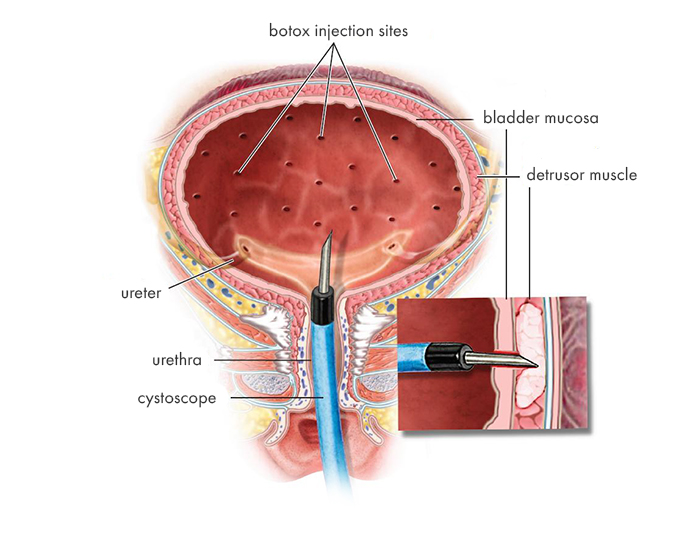
Botox is a muscle relaxant, commonly known for improving wrinkles by reducing facial muscle contractions. It has an array of additional medical uses, including migraines and urinary incontinence. A urologist can inject Botox into your bladder through a urethra to reduce urge incontinence or overactive bladder (OAB). It works because when the bladder muscles are relaxed, you’ll have more time to get to the bathroom. The injections are performed in a clinic. The procedure is not painful, but there may be some discomfort afterwards that’s comparable to a period cramp.
Most people report symptom relief within a few days, and the treatment results can last for six months.
Cost of Botox Compared to Other Incontinence Treatments
Many people find Botox injections to be a cost-effective treatment, compared to over the counter (OTC) absorbency products or prescriptions medications due to the recurring monthly costs that can be substantial at the end of the year. While individual Botox treatment costs are high, the total cost at the end of the year can be lower than prescription medications and Depends for someone managing severe incontinence.

1. OTC Products: $1,920-$2,880 per year
Adult diapers and absorbent underwear, like the Depend brand, can cost almost $70 dollars for one package. They are an easy first choice, because you can buy them online or over the counter (OTC) at the drug store without a prescription. A recent survey showed people spending $160 to $240 per month on OTC incontinence products, which translates to $1,920-$2,880 over the course of a year.
2. Prescription Medications: $600-$2,700 per year
There are several good prescription medications used to treat urinary incontinence, including Detrol LA, Ditropan, and Toviaz. These are oral anticholinergics that relax bladder muscles or stimulate the urethral sphincter, which reduces urge incontinence. One recent study estimates the annual cost for these prescriptions could range from as low as $600 to as high as $2,700.
3. Botox Injections: $1,200-$2,400 per year
Bladder Botox injections provide fast, ongoing relief that can last for about 6 months. While Botox is more expensive per treatment than OTC absorbents or prescription medications, the total cost over the course of the year is fairly comparable. An added benefit of Botox over is an improved quality of life with a set-it-and-forget-it remedy.
4. Surgery: $10,000-$20,000 per procedure
Surgical procedures to treat incontinence are considered a last resort due to the possibility of post-surgical complications, including urinary tract infections. The most common incontinence surgery is a sling surgery, which is performed in a hospital under general anesthesia. During this procedure a doctor positions a device under the urethra to add support and reduce wetting accidents. Surgery is the most expensive option, but most of the cost could be covered by medical insurance.
Is Botox More Expensive than Common Coping Strategies?
As you can see from the above comparison, the annual cost of Botox injections could be less than a full year supply of OTC adult absorbency products or a full year supply of prescription medications. This cost comparison shows that Botox is a cost-effective treatment option for OAB. And when you consider the value of an improved quality of life, then Botox emerges as one of the best OAB solutions on the market today.
Improved Quality of Life

Beyond the cost considerations, Botox injections offer substantial improvement in one’s quality of life because it delivers an “out-of-sight, out-of-mind” remedy, due to the sustained relief that can last up to 6 months. And many women and men report a significant improvement in their physical and emotional well-being when they feel safe getting out and engaging in more physical activity.
In fact, in one study participants reports that they felt like they’d reclaimed control over their lives. They said that they were controlling their OAB, instead of their OAB controlling them.
Conclusion
In the world of urge incontinence and OAB treatments, Botox injections are emerging as a beacon of hope. This treatment is both effective and cost-efficient compared to the annual cost of coping strategies and surgery. It’s helping people transform a severe hindrance into a manageable aspect of their lives.
Sources
- “Botox Injections for Overactive Bladder: What You Need to Know.” Mayo Clinic Proceedings.
- “Cost-effectiveness of OnabotulinumtoxinA for the Treatment of Overactive Bladder.” Urology.
- “Comparative cost-effectiveness of antimuscarinic agents for overactive bladder.” BJU International.
- “Comparison of Anticholinergic Therapy Started in the Office, at Home or by Flexible Dosing: Impact on Adherence in Women with Urgency Urinary Incontinence.” The Journal of Urology.
- “A cost-utility analysis of onabotulinumtoxinA as second-line treatment for the management of overactive bladder in the United Kingdom.” BMC Urology.
Leave a Reply